The Problem With a List That Begins From Nothing
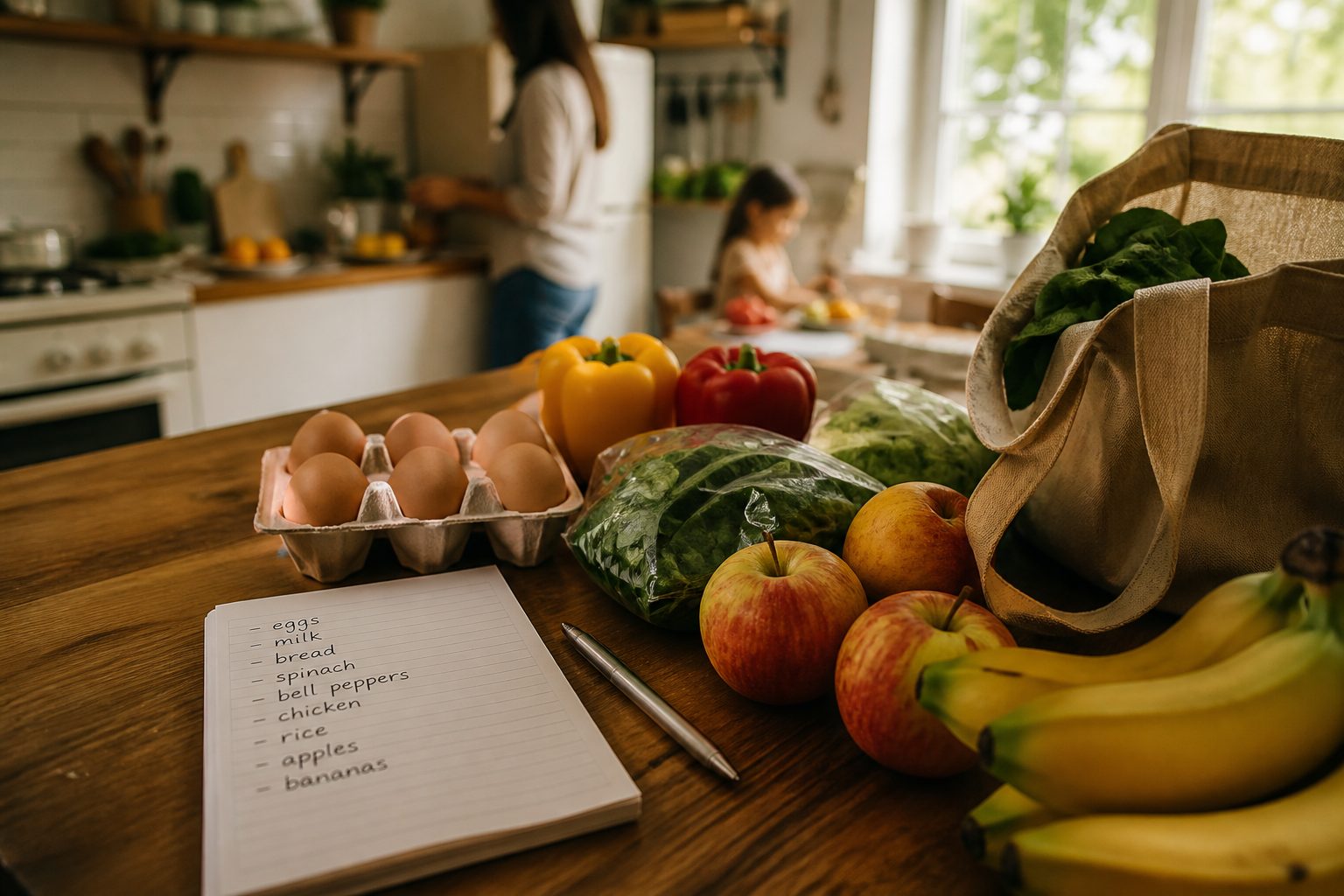
There's a particular kind of grocery list that lives on most refrigerators or inside a notes app: a scrawled, half-finished record of whatever someone remembered to write down between one trip and the next. Milk. Eggs. That sauce we like. It grows through the week by memory and shrinks a little every time someone forgets to add something before running out the door. By the time anyone actually stands in a store aisle, the list is a rough sketch of the week rather than a plan for it.
This is the quiet flaw in most shopping apps, too. They're built to be excellent at capturing items — checkboxes, categories, barcode scanning — but they rarely help with the harder problem, which is knowing what to put on the list in the first place. A blank text field doesn't know that Thursday's dinner needs two cans of crushed tomatoes, or that there's already a half bag of rice in the pantry from two weeks ago. It just waits patiently for someone to remember.
The result is a familiar pattern: a trip to the store that covers the obvious staples, followed by a second trip mid-week for the one ingredient nobody thought of, followed by a freezer that slowly fills with things bought "just in case" and never used. None of this is really about willpower or organization. It's about the list itself starting from nothing, every single time.
There's also a quieter cost that's easy to miss: duplicate purchases. Without a record of what a list was actually for, it's common to buy a jar of a specific sauce because it seemed likely to be useful, only to find two open jars of the same thing in the door of the fridge a month later. A blank list has no memory of what's already been bought recently, so it tends to err toward buying again rather than checking first. Multiply that across a dozen small staples and the waste adds up quietly, a few dollars and a little pantry clutter at a time, without ever feeling like a single dramatic mistake.
What a List Generated From a Real Plan Looks Like
The alternative is simpler than it sounds: build the list from the meals, not the other way around. If you already know that dinner on Monday is a sheet-pan chicken, Wednesday is a lentil soup, and Friday is whatever pasta happens to need using up, then the ingredients for all three are already implied. A list generated from that plan just has to add them up — one onion for the chicken, one for the soup, count the total, note it once.
This is the core idea behind a shopping list generator worth using: it isn't a blank canvas, it's a byproduct. A shopping list built directly from the meals sitting on a household's weekly dinner calendar can pull ingredients from saved or imported recipes rather than asking anyone to retype them by hand. The list exists because the week already has a shape, not because someone sat down and tried to reconstruct every ingredient from memory.
The practical difference shows up in small ways. Quantities reflect what the week's recipes actually call for, so there's less guessing about whether two peppers is enough or three cans of beans is overkill. Ingredients that repeat across a few recipes — garlic, olive oil, a particular spice — get combined instead of listed three separate times. And because the list traces back to specific meals, it's easier to remember why something is on there at all, which matters when you're standing in an aisle trying to recall whether the recipe wanted fresh or dried thyme.
Consider a fairly ordinary week: a chicken traybake, a bean chili, and a stir-fry. Built by hand, that's three separate recipe cards to reread, three separate mental tallies of onions and garlic, and a real chance that the second bag of rice gets bought because nobody remembered the first one was already half full. Built from a plan, those three recipes get combined automatically into one list — one entry for onions with a quantity of four, one for garlic, one for rice with a note that there's already some on hand. The cooking itself doesn't change at all. What changes is how much mental effort it takes to get to the store with the right things in hand.
What "Generator" Should Mean for a Family, Not Just a Feature
It's worth being precise about what "generator" ought to mean here, because the word gets used loosely. A generator that just spits out a generic list of common groceries isn't actually solving the problem — it's a fancier blank page with some popular items pre-filled. That's not much better than starting from memory, since it still has no relationship to what anyone is actually planning to cook that week.
A generator that's genuinely useful for a household needs a few specific qualities. It should pull from the meals that are on the calendar for that particular week, not a generic rotation someone else picked. It should let pantry basics — flour, olive oil, the spices already in the cabinet — be left off or checked off, since restocking a full pantry every week is wasteful and unnecessary. It should be editable, because no system should assume it knows better than the person who's actually going to cook and shop; sales, substitutions, and cravings are all real inputs that a generated list has to accommodate rather than fight.
And for most families, it should be shared. A list built for one person to view is only half as useful as a list a partner, roommate, or teenager can also see and add to. Sharing a household's list means it stops being one person's job to remember and becomes a live document instead — someone can add "we're out of coffee" from their phone at work, and it shows up before anyone drives to the store. This is where a generated list earns its keep: not by being clever, but by staying current and visible to everyone who might end up doing the shopping.
It also has to be easy to adjust without feeling fragile. If a recipe calls for a can of black beans but the store only has pinto beans on sale, swapping that line item shouldn't require rebuilding anything else on the list. A generator that treats its own output as a suggestion, rather than a locked record, respects the fact that the person holding the cart has more current information than any plan made days earlier. The list should be able to absorb a substitution, an extra item, or a removed one without losing track of everything else that's still accurate.
When the List Still Needs a Human Touch
None of this makes the list fully automatic, and it shouldn't try to be. A generator is a starting point, not a finished document. Sales change what makes sense to buy this week. A recipe might call for an ingredient that's already sitting in the fridge from a previous grocery run, and no system can see the actual state of a specific refrigerator. Kids' preferences shift without warning. Someone decides Thursday should actually be leftovers instead of the planned stir-fry.
The value of building a list from a plan isn't that it removes editing — it's that editing starts from something coherent instead of nothing. Crossing an item off a real list because you already have it is a much smaller task than trying to reconstruct an entire week's ingredients from memory in a parking lot. Adding an extra item or two doesn't undo the structure underneath; it just means the plan flexes a little, the way real weeks always do.
There's also a modest budget angle worth naming honestly, without overstating it: a list tied to specific meals tends to produce fewer stray purchases, because there's less browsing-and-guessing happening in the store aisle by aisle. That's not a guarantee of savings, and it won't make grocery shopping into something dramatically different. It's a practical shift — buying closer to what a household will actually use, because the list reflects meals someone genuinely intends to cook.
The same logic applies to food waste, which tends to come from buying with vague intentions rather than specific ones. An extra bunch of cilantro bought "because it might be useful" often ends up wilting in the crisper drawer, while a bunch bought because two specific recipes that week both call for it gets used in full. None of this requires anyone to become more disciplined. It's simply easier to use what you bought when you knew, at the time of buying it, exactly what it was for.
Recipes can be saved or imported ahead of time, so their ingredients are already sitting there whenever a meal gets added to the calendar; nobody has to retype a recipe they found online just to get its ingredients onto a list. Over a few weeks, that saved recipe collection becomes its own kind of shortcut — the tedious part of listing ingredients only has to happen once per recipe, not once per week.
If the idea of a list that already knows what the week holds sounds more useful than another empty checklist, myDinnerPlan builds the shopping list directly from the dinner calendar so the two never drift apart. It's free to start, with Premium adding the fuller calendar and household sharing tools for families who want everyone working from the same plan. You can create an account and try building one week of dinners to see how the list fills itself in from there.
The goal isn't a perfect list or a flawless week. It's a list that starts from something true about what a household is actually going to cook, so the parts that still need a person — the substitutions, the sales, the sudden change of plans — are the only parts left to think about.
Ready to put this into practice? Plan your week with myDinnerPlan.
Create free account