Locking in Dinners First So One Shop Covers the Week
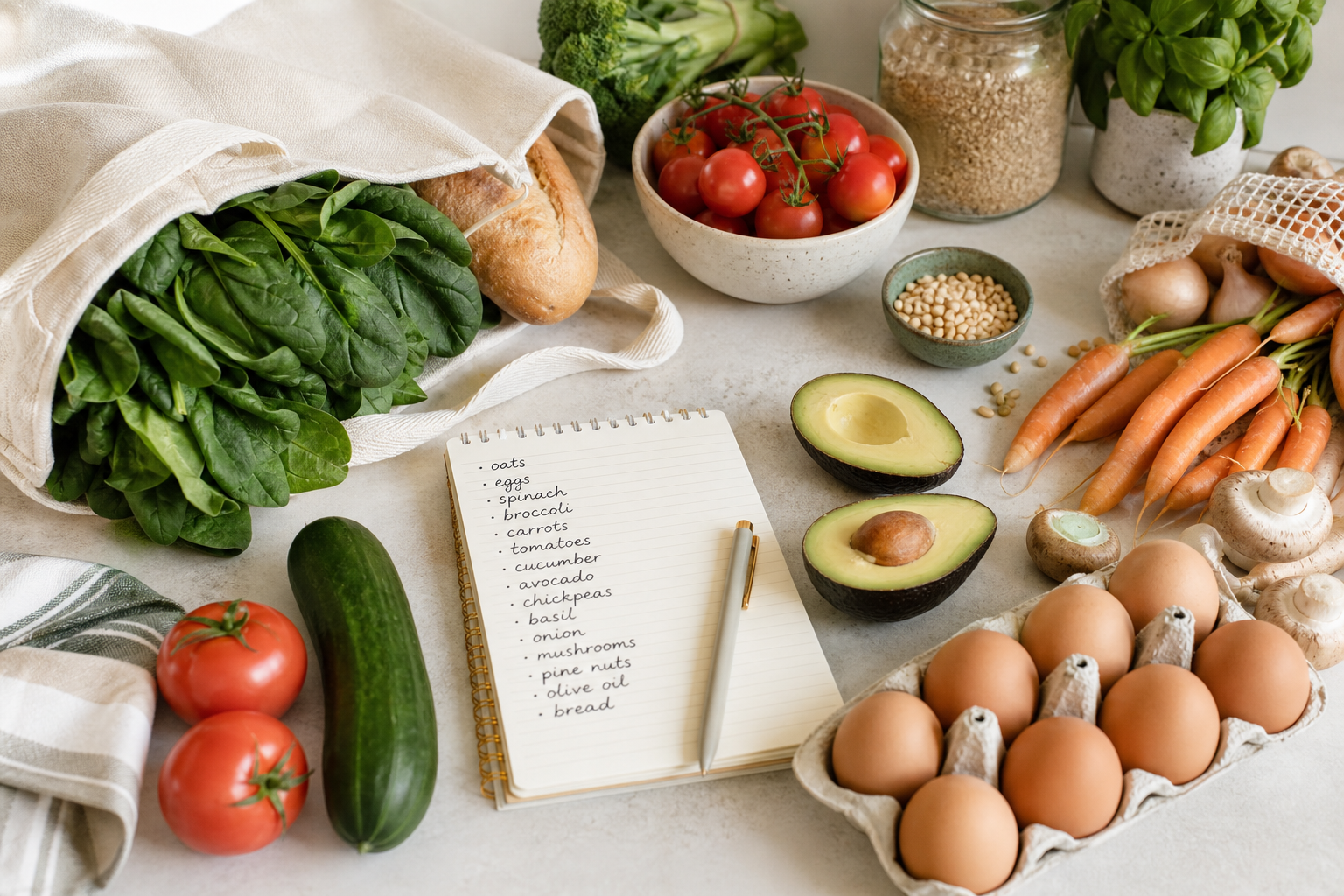
A shopper who walks the aisles without a fixed list often returns home missing two or three items and heads back out two days later for the forgotten produce or protein. The alternative begins not at the store but at the kitchen table with a complete list of the seven dinners that will actually be cooked.
Once those meals are written down, every ingredient is counted exactly once. The resulting list rarely contains duplicate purchases of the same item because the planner already knows how much chicken, rice, or canned tomatoes will be used across the entire week.
Selecting Meals That Share Core Ingredients
Recipes chosen for the week work best when they draw from the same set of base items rather than requiring separate specialty purchases. A roasted chicken on Monday can leave enough meat for Wednesday’s quesadillas and Friday’s soup, while the same bag of onions and carrots supports both dishes plus a side for Thursday. Because the quantities are calculated together, the single bag of carrots is sized to cover all three uses instead of three separate small bags bought on different days.
This overlap reduces the total number of items on the list and keeps the cart from filling with produce that will spoil before it is needed. It also limits the temptation to add unrelated snacks or condiments that appear only because the shopper is wandering without a fixed purpose.
Counting Exact Amounts Before Leaving Home
Writing the shopping list from the dinner outline requires adding up every serving. If Tuesday’s pasta sauce calls for two cans of tomatoes and Saturday’s chili needs three, the list states five cans rather than two separate entries. The same addition applies to staples such as rice, oil, or cheese. Shoppers who skip this step often buy too little of one item and too much of another, which leads to an extra trip for the missing amount.
Perishable goods receive the same treatment but with tighter limits. Milk and fresh herbs are listed only in the quantity that will be finished within a few days, while longer-keeping vegetables are listed more generously. The difference between these two categories becomes visible on the list itself, so the shopper does not overbuy salad greens that will wilt by Thursday.
When a Single Trip Falls Short
The method weakens when the week includes an unexpected guest or when a child suddenly refuses a planned meal. In those cases the original quantities no longer match actual consumption. A second common failure occurs with highly perishable items such as fresh fish or berries; even careful counting cannot extend their usable life across seven days.
Weather or schedule changes can also shift cooking plans. A planned grill night becomes impossible during a thunderstorm, and the ingredients bought for that meal sit unused. These gaps are predictable enough that many planners keep one flexible backup meal—such as eggs and toast or a pantry pasta—that can absorb leftover ingredients without requiring new purchases.
Adjusting Quantities Midweek Without New Trips
When an ingredient runs low earlier than expected, the remaining dinners can be rearranged rather than supplemented. If the planned amount of ground beef proves insufficient for both Wednesday and Friday, the Friday meal can shift to beans already on hand. The same principle applies in reverse: extra vegetables from one meal can be added to another instead of being discarded. Because the original list was built from actual recipes, the cook already knows which ingredients can substitute without changing the overall flavor direction.
This flexibility keeps the household from adding midweek store visits. The single trip remains sufficient as long as the cook treats the plan as a framework rather than a rigid script.
A simple digital tool that lets users enter their chosen dinners and then generates the combined shopping list can make the counting step faster, though the same result can be reached with paper and pencil. For readers ready to try the approach, the registration page at /register offers one place to keep the weekly outline and list in one spot.
Ready to put this into practice? Plan your week with myDinnerPlan.
Create free account