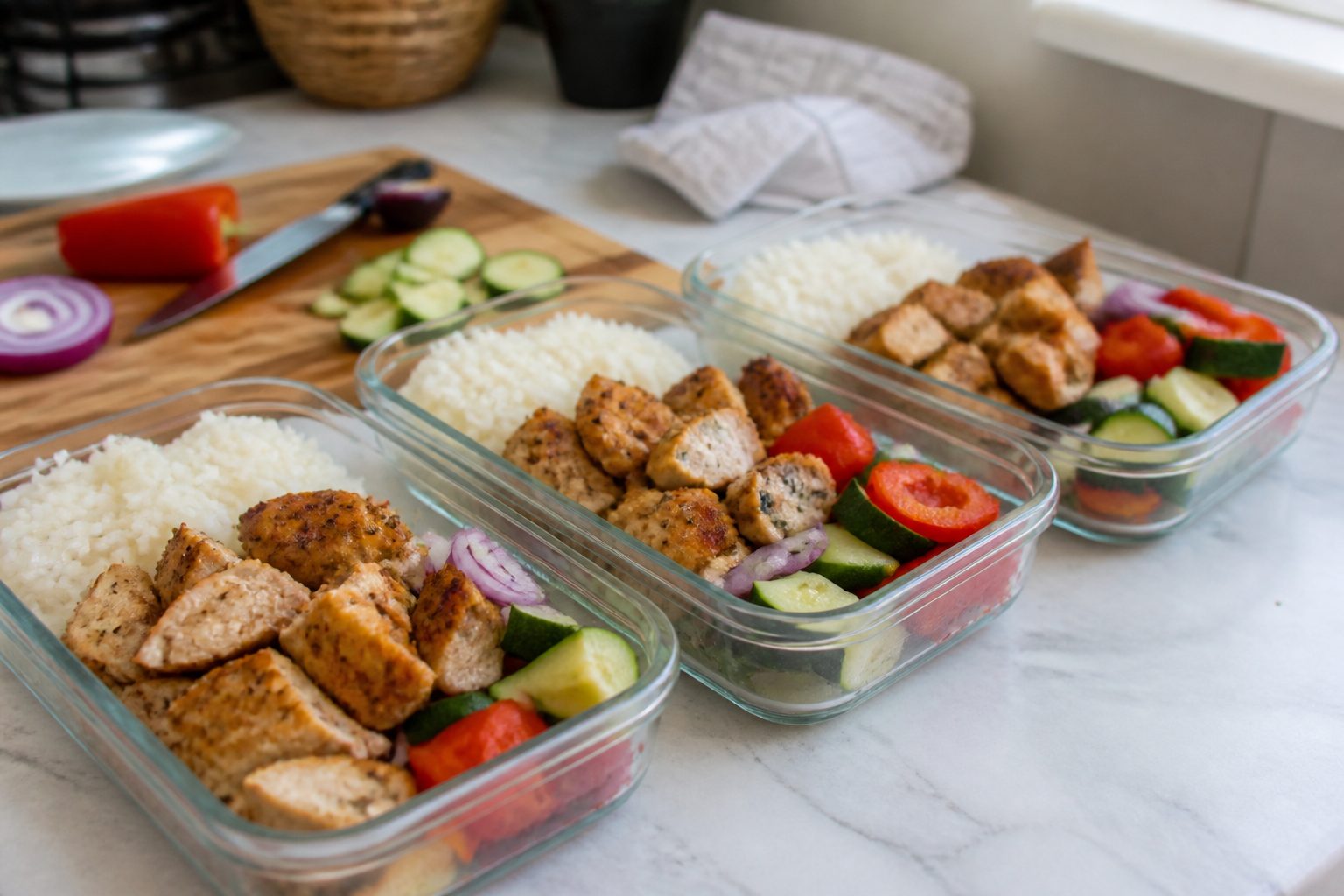
A lot of meal prep content is really about presentation: a fridge full of matching glass containers, portioned out into identical compartments, photographed from above. That's a hobby, and a fine one, but it's not what most beginners actually need, and treating it as the standard version of meal prep tends to scare people off the idea entirely. The more useful starting point is smaller and less visual: a handful of ingredients, prepped just enough to remove one step from a few dinners later in the week. Organizing that around what you're actually prepping, rather than around a finished, photographed system, makes it easier to figure out where to start.
One Protein, Cooked Once, Used Twice
The single highest-leverage habit for someone new to prepping is cooking one protein in a larger batch than a single meal needs, then using it across two or three dinners that don't taste like repeats. A pot of shredded chicken, simmered plain or with minimal seasoning, can become a weeknight stir-fry on Monday, tacos on Wednesday, and a quick soup on Friday, without ever feeling like leftovers because it was seasoned differently each time. The same logic works with a pound and a half of ground meat browned plain and split into portions, or a batch of beans cooked from dry and divided before any specific dish's spices get added.
The habit that actually matters here isn't the cooking, which most people already know how to do, it's the decision to cook more than one dinner's worth on purpose. That requires looking slightly ahead, at least a few days rather than just tonight, to know that Wednesday's tacos are coming and that it's worth simmering enough chicken for both nights now. It's a small planning step, not a technique, and it's the one that turns a single dinner's cooking into a head start on the rest of the week.
Where beginners tend to overreach is trying to cook every protein for the whole week in one sitting, four or five different meats and a pot of beans, all on a Sunday afternoon. That's a lot to take on before knowing whether the habit will stick, and it front-loads a big block of cooking time that can be hard to find some weeks. Starting with just one protein, used across two dinners rather than five, is a smaller commitment that's easier to actually follow through on, and it's simple to add a second protein into the habit later once the first one feels routine rather than like an extra project.
A Grain or Starch That Holds Up
Rice, farro, quinoa, and roasted potatoes all keep well for several days refrigerated, and none of them taste noticeably worse reheated than a lot of other cooked food does. Making a larger pot of rice on a night when the stove is already on for something else means that grain is simply sitting there, ready, for a grain bowl or a fried rice later in the week that would otherwise require starting from a cold pot and twenty extra minutes. It's a low-effort form of prep because it usually doesn't add a task, it just resizes a task that was going to happen anyway.
The tradeoff worth knowing about is texture. Some starches hold up better than others: a sturdy grain like farro barely changes over three or four days, while something like fresh pasta degrades faster and is a poorer candidate for prepping ahead. Potatoes go a specific direction too, a roasted potato reheats reasonably in a hot oven or pan but turns unpleasantly soft in a microwave. None of this requires memorizing a rulebook, just noticing after a couple of tries which starches in a household's regular rotation actually survive a few days in the fridge and which ones are better made fresh each time.
It also helps to size the batch to what will actually get used rather than to what fits comfortably in the pot. A large pot of rice made because the pot was already out is only useful if there's a dinner later in the week planned to use the extra, otherwise it's just something taking up space in the fridge until it gets thrown out. This is really a planning question dressed up as a cooking one: the prep only pays off if there's a specific dinner a few days out that it's meant to feed, which means it works best alongside at least a rough sense of what the week's dinners are, rather than as a habit done in isolation from the rest of the week.
Vegetables Prepped Raw, Not Cooked
Beginners often assume vegetable prep means cooking vegetables ahead, but the more durable version of that habit is usually just cutting them. A washed and chopped onion, a bag of sliced peppers, carrots cut into sticks or coins, all keep for several days in the fridge raw and shave real time off a weeknight dinner without the flavor or texture loss that comes from cooking a vegetable ahead and reheating it later. Cooked vegetables tend to go soft and lose whatever brightness they had; raw, prepped vegetables go straight into a hot pan or a salad exactly when they're needed and taste like they were just cut, because they were.
This is also the easiest place to start for someone who isn't sure meal prep is for them, because it requires no new cooking skill, just doing a normal task, chopping an onion, a day or two earlier than the moment it's needed. Fifteen minutes on a Sunday spent cutting the vegetables for two or three dinners later in the week removes a genuinely tedious step from busy nights without asking anyone to cook anything in advance.
There's a natural limit here worth respecting too. Not every vegetable holds up well pre-cut, leafy greens wilt, avocado browns, and delicate herbs go limp within a day regardless of how they're stored. Trying to force those into the same routine as onions and carrots usually just means throwing away wilted produce later in the week, which defeats the purpose. The habit works best applied selectively, to the sturdier vegetables that a given household actually uses often, rather than as a blanket rule applied to the whole produce drawer.
Aromatics and Seasoning Bases
Garlic, ginger, and onion form the starting point of an enormous share of everyday dinners, and they're also some of the more tedious things to prep from scratch on a weeknight. Mincing garlic or grating ginger takes only a couple of minutes, but it's exactly the kind of small friction that makes a tired cook reach for a simpler dinner instead of the one that was actually planned. Prepping a jar of minced garlic or a small container of grated ginger once, to use across several dinners that week, removes that friction from every one of them rather than just one.
The same applies to spice blends measured out ahead for a dish that gets made often. It's a small thing, and it won't change how a household cooks overall, but it's the kind of preparation that pays for the few minutes it takes almost every time, because it's used repeatedly rather than once. This is a useful place to notice the difference between prep that helps and prep that's really just extra dishes to wash: a jar of prepped garlic used four times in a week earns its space in the fridge, while a specialty sauce made for one recipe that never gets repeated usually isn't worth prepping ahead of time.
Sauces as the Real Flexibility
A base sauce or dressing, made once and kept in the fridge for the week, tends to matter more than most vegetable or grain prep, because it's what actually varies a rotation of otherwise similar dinners. The same roasted vegetables and grain can read as a completely different meal depending on whether they're finished with a peanut-lime sauce, a simple vinaigrette, or a garlicky yogurt sauce. Making one of these in a slightly larger batch on a day when there's already time for it means several nights later in the week have an easy way to feel distinct from each other without any additional cooking.
This is worth treating as the actual center of a beginner's prep routine rather than an afterthought, because it's the lowest-effort way to keep a repeating rotation of proteins, grains, and vegetables from feeling repetitive. A jar of dressing takes ten minutes and lasts most of a week; that's a better return on a small amount of time than almost anything else on this list, and it's often the piece that gets skipped by people jumping straight to elaborate prep sessions on the protein and grain side.
None of this needs to add up to a full weekend of cooking in order to count as meal prep. A protein cooked once, a starch made in a larger batch, an onion chopped ahead, and a sauce mixed up on a slower day, that's a real system even if it takes under an hour spread across a week rather than one dedicated session. Keeping track of which dinners each of those pieces is meant to feed is really just a version of planning the week itself, which is easier with a place to hold the whole week's dinners together rather than remembering it all. That's the basic idea behind myDinnerPlan's weekly calendar and saved recipes, along with a shopping list built from whatever's actually on the plan. It's free to start, and there's a low-key path in if it's useful: you can set one up here and try prepping just one piece of a single week before deciding whether to build on it.
Ready to put this into practice? Plan your week with myDinnerPlan.
Create free account