Common assumptions about feeding mixed ages often lead to extra work or waste. Practical tradeoffs around shared bases and flexible sides resolve most conflicts.
Everyone Must Eat Exactly the Same Plate
The idea that a single plate must satisfy every preference at the table creates unnecessary rigidity. In practice, a central protein or starch cooked once can branch into variations through simple additions rather than duplicate preparations. A roasted chicken, for instance, supplies the base for adults who want it paired with roasted root vegetables and a pan sauce while younger diners receive the same meat shredded over buttered noodles with a mild vegetable on the side. The cook avoids extra proteins by keeping seasoning neutral until the final plating step.
Tradeoffs appear in portion control and timing. Preparing the bird with a light rub of salt and pepper allows one person to add chili flakes or fresh herbs at the table without altering the whole dish. This approach reduces the number of pans on the stove yet still accommodates differing spice tolerances. Families that adopt it often notice they shop for fewer specialty items because the main component stays consistent across meals. The real adjustment lies in accepting that uniformity ends at the cooking stage and customization happens in small, low-effort ways afterward.
Older Generations Only Accept Traditional Recipes
The assumption that older family members reject anything outside long-standing recipes overlooks how tradition can coexist with modest updates. Rather than presenting an entirely new dish, cooks can anchor the meal in familiar techniques while adjusting textures or accompaniments. A pot roast prepared with the usual carrots and onions can sit beside a separate bowl of quicker-cooking greens for those who prefer brighter flavors or easier chewing. The core braising method remains unchanged, satisfying the expectation of a slow-cooked centerpiece.
Practical tradeoffs involve advance communication and small batch testing. Preparing a half-portion of a familiar seasoning blend alongside a lighter version lets everyone taste both without committing the full meal to one style. Over time this reveals which elements truly matter—often the method of cooking rather than every single ingredient. The result is less repetition of the exact same menu week after week and more room to incorporate seasonal produce that still fits the established framework. The effort shifts from defending innovation to demonstrating continuity through shared methods.
Kids Require a Completely Separate Simplified Menu
Treating children’s meals as wholly distinct from adult fare multiplies both cooking time and cleanup. A more workable path uses the same core ingredients assembled in different forms. A sheet-pan meal of salmon, potatoes, and broccoli can be divided at the end: adults receive the fish with a mustard glaze and the vegetables roasted until crisp, while children get plain flakes of salmon, softer potato chunks, and raw broccoli florets served with a familiar dip. The single baking sheet and shared shopping list remain constant.
The tradeoff centers on timing the final assembly rather than separate cooking. Components that finish at different rates can be removed in stages, or a portion of the vegetables can be set aside before heavy seasoning. Families find that this method gradually introduces new textures without requiring an entirely separate grocery list or stove time. Over several weeks the simplified versions evolve naturally as tolerance grows, reducing the sense that children’s meals must always stay static. The planning focus moves to versatile ingredients that scale across ages instead of parallel menus.
Mixed Tastes Always Demand Extra Shopping Trips
The belief that varied preferences require multiple versions of every staple inflates both cart size and waste. A narrower set of versatile items—rice, beans, eggs, seasonal vegetables, and one or two proteins—can stretch across several flavor directions when stored and prepared with flexibility in mind. A large pot of beans simmered plainly can become chili for one group, a milder stew for another, or a simple side topped with cheese and salsa for others. The shopping list stays short because the base ingredient serves multiple roles.
Tradeoffs appear in storage and reheating rather than volume purchased. Keeping neutral stocks or sauces on hand allows last-minute adjustments without new trips. When a household plans around these building blocks, the frequency of store visits drops because the same items appear on the list with minor variations week to week. The adjustment requires accepting that not every meal will feature an entirely new protein or exotic vegetable; instead, repetition of reliable components frees attention for small flavor changes that keep everyone engaged. Over repeated cycles the approach reveals how much overlap already exists among seemingly conflicting tastes.
Tools such as myDinnerPlan can help organize these plans if the household wants to track shared bases and flexible sides across the week. Readers ready to explore that option can begin at /register.
Dietary Restrictions Require Completely Separate Cooking
The notion that allergies, intolerances, or medical diets force an entirely parallel kitchen operation often inflates both labor and the sense of division at the table. In reality, many restrictions can be managed through selective omission and parallel finishing steps that still draw from the same foundational preparations. A large batch of quinoa, for example, can be divided after cooking: one portion finished with cheese and herbs for those without restrictions, another left plain and paired with a dairy-free sauce for lactose-intolerant diners, and a third combined with additional vegetables for anyone avoiding gluten. The base grain remains one cooking event rather than three.
Tradeoffs surface in labeling and cross-contamination prevention. Using dedicated utensils for final assembly and clear serving dishes prevents accidental mixing while still allowing the household to share shopping and initial prep. Families that practice this method report that the perceived burden decreases once they map which restrictions are additive rather than substitutive. Over successive weeks, the approach also surfaces common overlaps—such as naturally gluten-free starches or vegetable-forward dishes—that satisfy multiple needs without extra purchases. The planning emphasis therefore moves from isolation to modular construction that respects boundaries without duplicating effort.
One Cook Must Handle Every Preference Alone
The assumption that meal planning and execution fall to a single person creates both resentment and inefficiency in multigenerational households. Distributing tasks according to capability and availability spreads the load while preserving the benefits of shared bases. An older family member might handle the slow braise or stock preparation earlier in the day, while a younger adult manages the quick vegetable sides or final seasoning at dinner time. Children can contribute simple steps such as washing produce or setting out condiments, turning the process into a low-stakes shared activity rather than a solo performance.
Practical tradeoffs involve clear communication about timing and skill levels. Written lists or shared digital notes prevent duplication and ensure that neutral components stay available for later customization. Households that adopt this division often discover that the total time spent decreases because parallel work replaces sequential handoffs. The result is less fatigue for any one individual and more consistent meals, since responsibility is rotated rather than concentrated. The focus shifts from heroic individual effort to coordinated routines that accommodate varying energy levels across generations.
Leftovers Cannot Accommodate Changing Tastes
Many families assume that once a large batch is prepared, its flavor profile is fixed and therefore unsuitable for the next day’s varied preferences. Yet planned leftovers can be deliberately neutral or lightly seasoned so that small additions revive them without new shopping. A pot of plain roasted vegetables can become a pasta toss with added cheese and herbs for one meal, a grain bowl with beans and salsa for another, or a blended soup with broth for those preferring softer textures. The initial cooking remains the same; only the reheating and finishing steps differ.
Tradeoffs center on storage containers and reheating methods that preserve texture. Portioning into single-serve containers labeled by intended use reduces decision fatigue at mealtime. Families notice that this technique cuts waste because the same ingredients serve multiple roles across days rather than requiring fresh purchases for every variation. The adjustment lies in viewing leftovers as flexible platforms instead of fixed dishes, which in turn reduces the pressure to cook from scratch each evening. Over time the household develops a short list of reliable base recipes that reliably support this kind of reinvention.
Planning Tools Add More Complexity Than They Solve
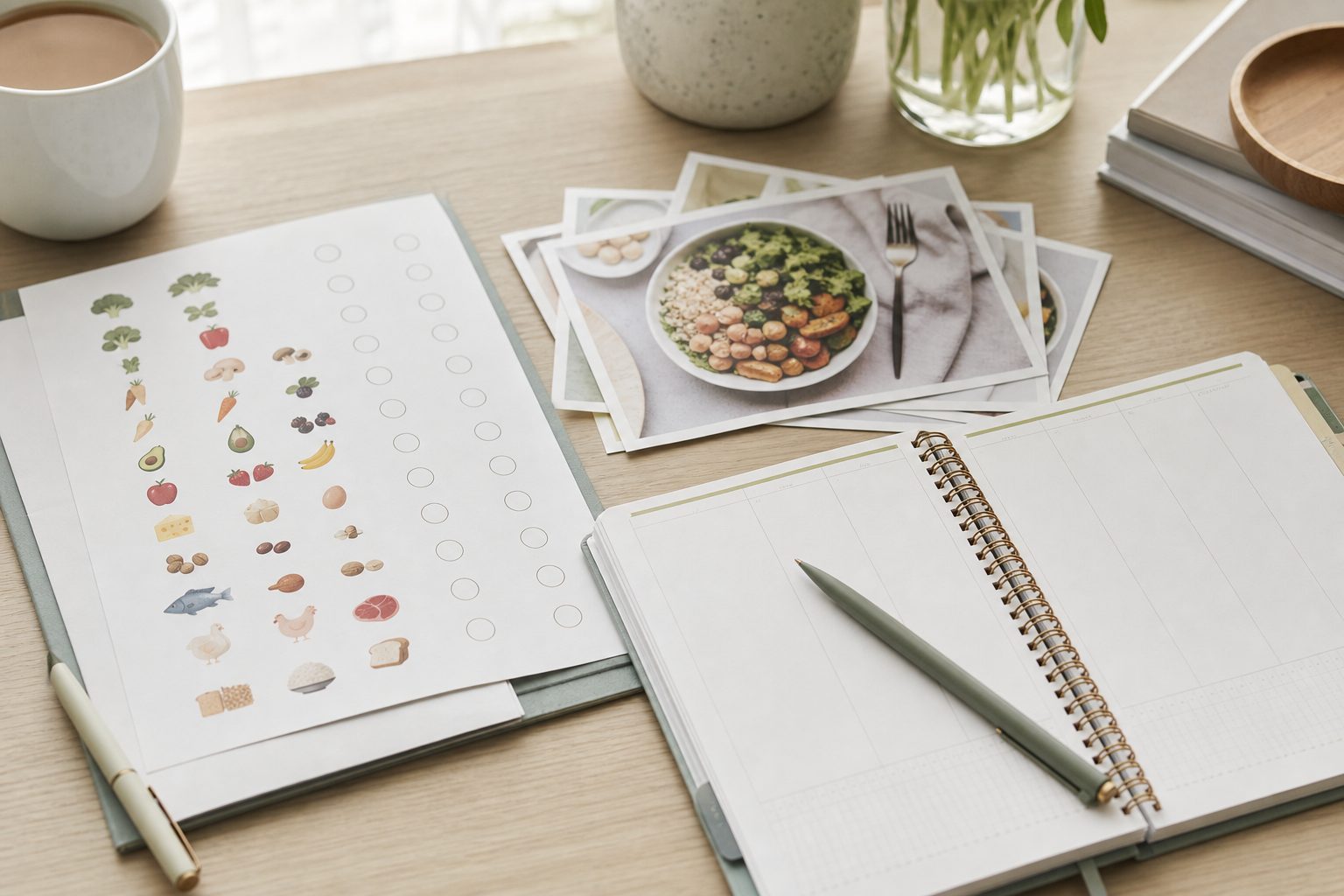
Skepticism about digital or paper planning systems often stems from the belief that they demand rigid adherence or excessive data entry. When used lightly, however, simple tools can surface patterns in shared ingredients and flexible sides without enforcing uniformity. A basic weekly grid that marks common proteins or starches across days helps identify opportunities for batch cooking and reduces duplicate shopping. The tool does not dictate exact menus; it merely highlights overlaps that the household can exploit.
Tradeoffs involve choosing the lightest possible interface that still captures the necessary information. Families that start with a minimal template and add only what proves useful avoid the trap of over-documentation. The payoff appears in fewer last-minute store runs and clearer delegation of tasks, since everyone can see which components are already prepared. Rather than replacing intuition, the system supports it by making the existing flexibility visible. As the household grows comfortable, the tool evolves from occasional reference to quiet background support that quietly trims both waste and stress.
Ready to put this into practice? Plan your week with myDinnerPlan.
Create free account