The Trouble With Sticky Notes and Memory
A sticky note is a good tool for exactly one thing: reminding you of something for the next few hours. It is a terrible tool for holding an entire week of dinners in your head, which is what most families ask it to do anyway. The note goes on the fridge with a recipe name and a day scrawled next to it, and by Wednesday half the plan has drifted because someone swapped nights, a note fell behind the fruit bowl, or the recipe itself was never fully written down in the first place — just a vague memory of "that pasta thing with the sausage." The list format hides a real problem: a sticky note has no memory of its own. It cannot tell you that you made that pasta three times last month, or that the chicken thighs recipe needs the marinade started the night before, or that you already have half the ingredients for the taco night sitting in the pantry from a plan two weeks ago. All of that context lives in someone's head, and if that person is tired, distracted, or simply out for the evening, the plan falls apart along with it.
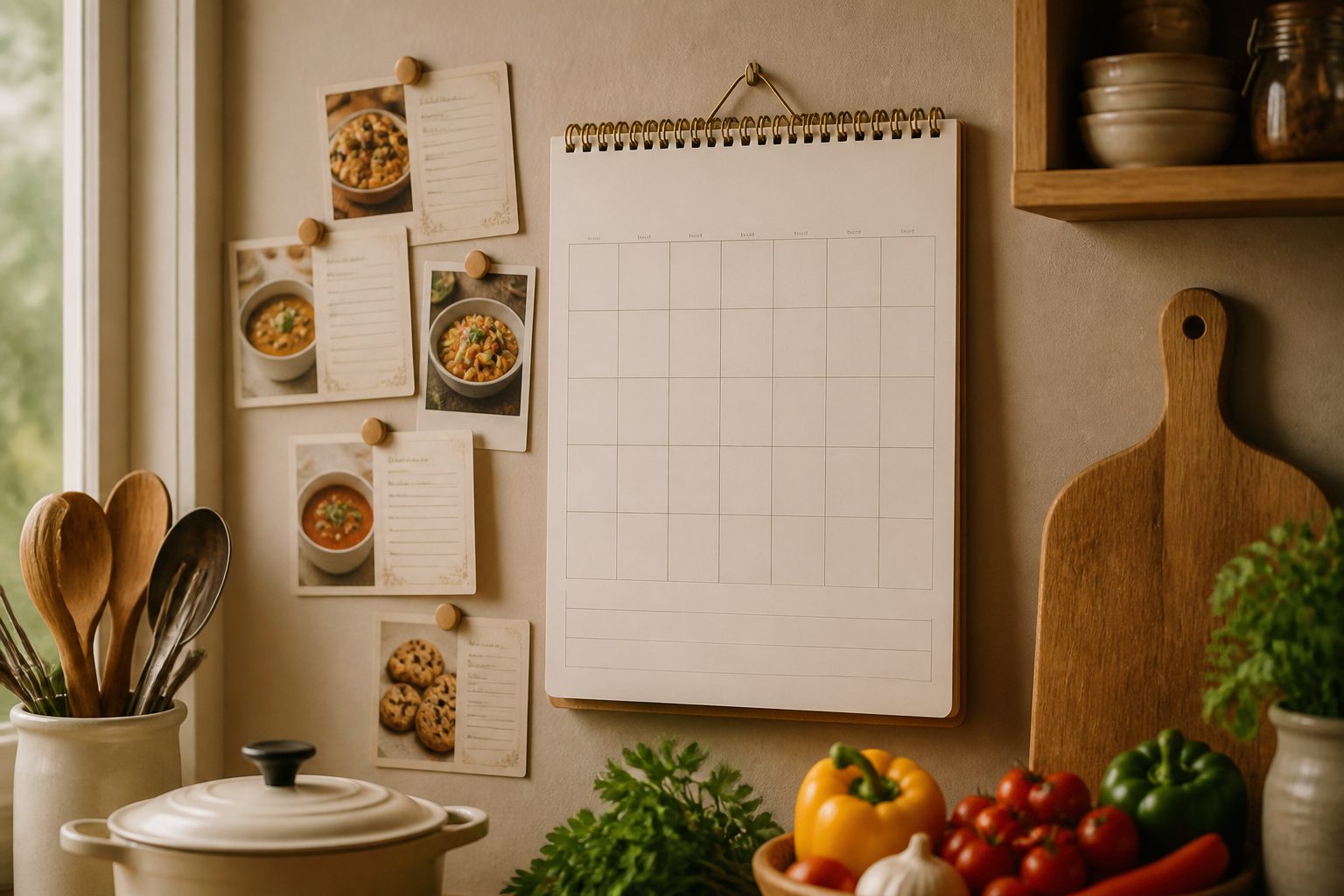
A calendar that is actually linked to the recipes themselves works differently. Instead of a day with a word next to it, each day holds the real recipe — ingredients, steps, and notes — sitting inside the week where it belongs. That distinction sounds small, but it changes how planning actually happens. You are not reconstructing a recipe from memory when Tuesday arrives; you are opening something you already saved, complete with the version you liked, the substitution you made last time, or the note that says the kids prefer it with less garlic. A recipe calendar is not really a scheduling trick. It is a way of storing decisions you have already made, so you are not required to make them again from scratch every single week.
A Week Built One Recipe at a Time
The easiest way to see the difference is to build a week the way a recipe-linked calendar encourages, rather than the way a sticky note forces you to. Start with what you already have written down or saved — a folder of recipes that have worked before, even loosely organized. Instead of asking "what should we eat this week," which is a big, shapeless question, you are asking a smaller one for each day: does this night need something quick, something that can sit in the oven while everyone is occupied elsewhere, or something built mostly from what is already in the pantry. Answering that question day by day, with actual recipes in front of you rather than a blank list, turns planning into selection instead of invention.
Say Monday is a slow night because of an early bedtime — a simple sheet-pan chicken recipe you have made a dozen times goes there, pulled straight from what is saved rather than reconsidered from scratch. Tuesday might be busier, so a recipe that reheats well or comes together from parts already prepped fits better. Wednesday, when there is a bit more time, is a reasonable place for something with more steps, maybe a soup or a braise that benefits from a longer simmer. Thursday can pull from what is left over — not a separate "leftovers night" concept, just a recognition that Wednesday's soup makes enough for two meals, so it gets placed on the calendar twice, once as the cooking night and once as the night it gets finished. Friday, loosely held, can flex toward whatever is easiest depending on how the week actually went.
Notice that none of this requires inventing five new dinners. It requires choosing from what is already known to work and placing each choice where it fits the shape of that particular day. That is the actual value of a calendar tied to real recipes: it turns a week of blank squares into a week of small, contained decisions, each one informed by a recipe you do not have to reconstruct from memory.
Repeating Favorites Without It Feeling Repetitive
Families tend to worry that leaning on repeated recipes will make dinner boring, so they push themselves toward novelty every week, which is part of why planning feels heavier than it needs to be. In practice, repetition is not the enemy — unplanned repetition without variation is. There is a real difference between making the same taco recipe every single week without changing anything, and rotating a small set of six or eight dependable dinners with enough spacing and small variation that no one notices the pattern.
A recipe calendar makes that kind of rotation visible in a way a sticky note cannot. When the last four weeks are laid out, or even just remembered because they were saved and reused, it becomes obvious that the same chicken dish appeared three weeks running, or that pasta night has quietly taken over half the calendar. Seeing that pattern is the first step toward correcting it — not by banning repetition, but by spacing favorites out and rotating in a few less frequent recipes to break up the rhythm. Repetition also earns you something sticky notes cannot offer: recipes that only need a glance rather than a full read-through, because you have made them enough times that the steps are familiar. That familiarity is not a failure of imagination. It is what makes a Tuesday night dinner manageable instead of a small research project.
Occasional variety still matters, and a recipe calendar makes room for it without requiring commitment. A new recipe can be tried out on a night with a lower cost of failure — a night when there is a backup, or when starting late is not a real problem — rather than being gambled on a night that needs to go smoothly no matter what. If it works, it gets saved and joins the rotation. If it does not, nothing is lost except that one evening, and the tried-and-true recipe returns to that slot the following week.
What Actually Changes When the Recipes Are Attached
The practical shift is smaller than it sounds but adds up over weeks. When a recipe is attached to its day rather than referenced by name, you stop losing the small details that made it good the first time — the extra ten minutes of roasting, the swap of one vegetable for another, the reminder that this one needs to start earlier than it looks. Those details are exactly the things that get lost when planning happens verbally or from a half-remembered list, and they are exactly the things that make cooking on a weeknight feel less like guesswork.
It also changes what happens when a week goes sideways, which every week eventually does. A meeting runs long, a kid gets sick, plans shift. With a plain list, a missed night usually means the whole week has to be reconsidered, because there is no structure holding the rest of it together — just a sequence of names that assumed each day would go as planned. With a calendar built from saved recipes, a missed night is just one square that moves. The Wednesday soup can slide to Thursday, and Thursday's original plan can slide to Friday, without anyone needing to reinvent what the week is supposed to look like. The recipes themselves have not changed; only their placement has, and moving a recipe from one day to another takes far less effort than deciding what to cook from nothing.
Making Room for a Week That Won't Cooperate
No calendar, however well built, survives contact with a real week without some flexibility. The goal is not a rigid schedule that has to be followed exactly, but a plan solid enough that changing it is easy rather than disruptive. That means leaving at least one night intentionally loose — not unplanned, exactly, but assigned something simple and forgiving that can absorb whatever the week has thrown at it by that point. It also means treating the plan as a draft for the week rather than a contract, something to glance at and adjust rather than something to feel behind on if it shifts.
This is where a shared, recipe-linked calendar earns its keep over a sticky note or a private mental list: everyone involved in cooking or shopping can see the same version, and a change made by one person is visible to everyone else without a separate conversation to relay it. myDinnerPlan builds around exactly this idea — recipes saved once and placed onto a weekly calendar that any Premium household can view and adjust together, with a shopping list built from whatever ends up on the plan. It starts free, and if a shared weekly view across the household is useful, setting up an account takes a few minutes and does not require committing to anything more than trying it for a week.
What makes the difference, in the end, is not a clever trick or a different way of writing things down. It is the simple fact that a recipe calendar remembers what a sticky note cannot: what you actually made, how it turned out, and where it fits in a week that has its own shape. Once that memory exists somewhere other than in someone's head, planning stops being a weekly reinvention and starts being a matter of choosing from what is already there.
Ready to put this into practice? Plan your week with myDinnerPlan.
Create free account