A common weeknight failure point isn't cooking skill, it's the 5:30 pm gap between "we have food" and "we have a plan." That gap is where takeout happens, where grocery trips get duplicated, and where kids end up eating random snacks.
If you're searching for easy dinner ideas for busy families, the fastest way to make weeknights calmer is to stop treating dinner as a daily decision. Meal planning turns dinner into a weekly decision, then a simple follow-through. At myDinnerPlan, that's exactly what we build: your recipes mapped to a weekly calendar, plus a shopping list that matches the plan.
Dinner Planning Made Easy: the 30-Minute Weekly Workflow
The goal isn't a perfect plan. The goal is fewer decisions on weekdays, fewer extra grocery runs, and dinners that fit the reality of your schedule.
Use this weekly workflow (it's intentionally short). Most families can complete it in about half an hour once the rhythm is set.
- Pick your "hard nights" first (2 minutes). Look at the calendar and mark nights with late meetings, sports, or errands. Those nights get the lowest-effort meals.
- Choose 2 "fast wins" (5 minutes). These are 15 to 25 minute dinners you can make on autopilot.
- Choose 2 "cook once, eat twice" anchors (5 minutes). Plan meals that intentionally create leftovers for a second night or for lunches.
- Choose 1 flexible night (2 minutes). Label it "leftovers," "breakfast for dinner," or "freezer." This protects the plan from real life.
- Map each dinner to a day (5 minutes). Put the fastest meals on hard nights. Put anything with chopping or longer cook time on the calmest night.
- Write the shopping list from the plan (10 minutes). This is where planning pays off. List ingredients in the quantities you actually need for the chosen recipes.
A practical rule we like: don't plan more than five dinners unless you truly cook seven nights a week. Planning too many meals is how food waste and guilt creep in.
If you want a lighter lift, start with three planned dinners and two "structured defaults" (tacos, pasta, or rotisserie chicken night). You still get the benefits of dinner planning made easy without the pressure of filling every day.
Easy Dinner Ideas for Busy Families That Actually Fit Weeknights
Most "quick dinner" lists ignore friction points, like kids who won't touch mixed dishes, limited prep space, or the fact that you're already cleaning up from lunch. The best weeknight dinners reduce friction on purpose.
Use this decision framework to pick meals that match your week:
- Choose sheet-pan meals if you want one cooking method and minimal cleanup. Pair a protein, a vegetable, and a starch that can roast together (or add bread/rice).
- Choose skillet meals if you need speed and flexibility. They adapt well when you're missing an ingredient.
- Choose slow cooker or pressure cooker meals if you need "dinner happens even if I'm not home." These are best on days with predictable mornings.
- Choose "assemble, don't cook" dinners if you're at maximum capacity. Think: rotisserie chicken with bagged salad and microwavable grains.
Here are easy dinner ideas for busy families that stay realistic and repeatable:
- Rotisserie chicken plates: chicken, pre-cut veg, store-bought hummus, pita or tortillas.
- Sheet-pan sausage and vegetables: serve with rice or couscous (cook while the pan roasts).
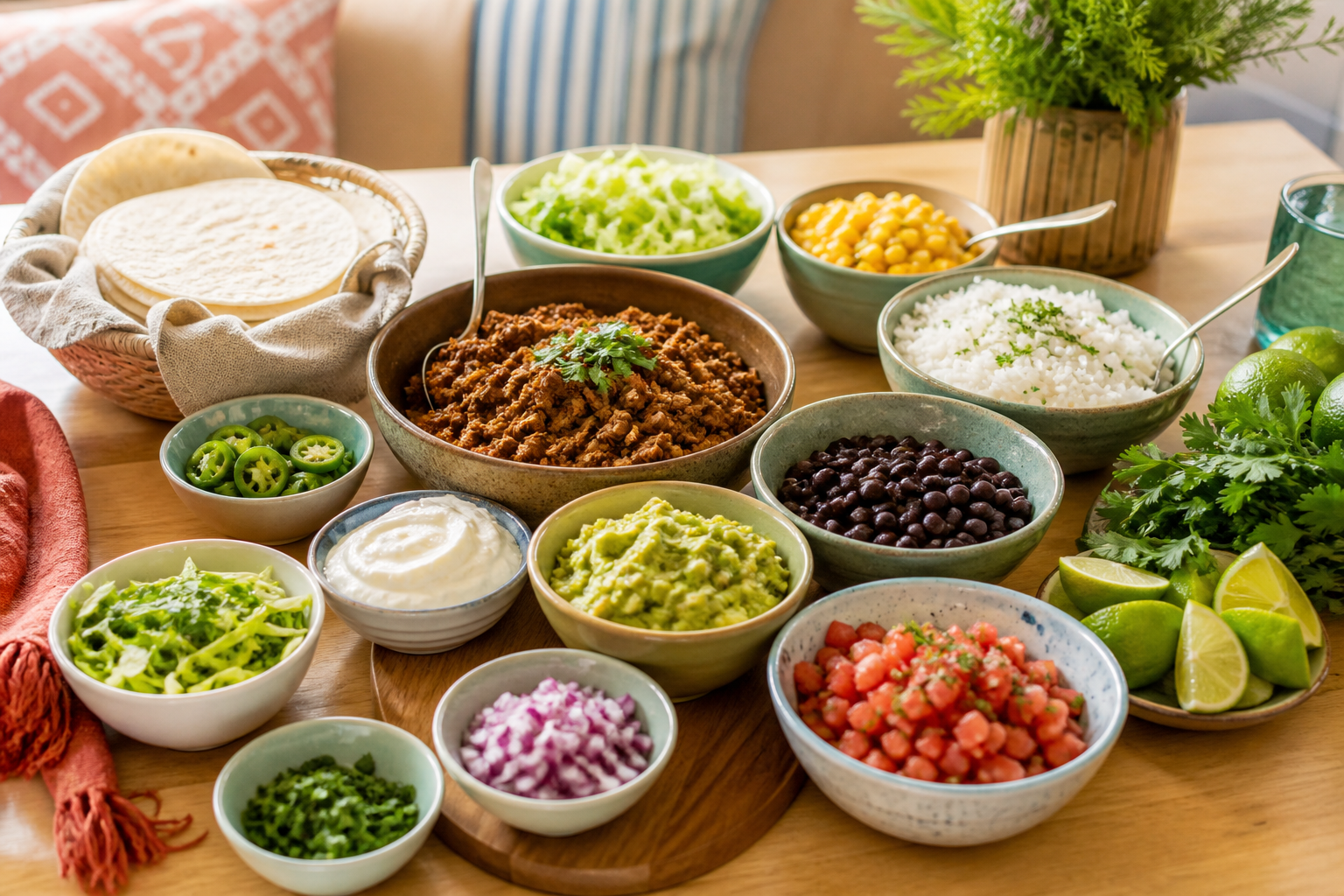
- Taco night with a shortcut: use pre-shredded cabbage as slaw, canned beans, and a quick salsa.
- "Pasta plus": pasta with jarred sauce upgraded with frozen spinach, Italian sausage, or chickpeas.
- Breakfast for dinner: eggs, toast, fruit, and yogurt.
To keep variety without adding complexity, rotate by format instead of by cuisine. For example: one sheet-pan night, one taco night, one pasta night, one leftovers night, one "new recipe" night. You get a rhythm, and your shopping list gets simpler.
Worked Example: a 5-Dinner Plan and the Shopping List Behind It
A plan is only as useful as the grocery list it creates. Below is a concrete, weeknight-friendly example designed around short cook times, leftover leverage, and one flexible night.
The Plan (with Built-In Trade-Offs)
This plan assumes you want five dinners, with one night intentionally left open for leftovers or schedule chaos.
- Monday (hard night): Rotisserie chicken plates
- Tuesday: Sheet-pan sausage, peppers, and onions + rice
- Wednesday (hard night): Pasta + jar sauce + frozen spinach + parmesan
- Thursday: Taco bowls (ground turkey or beans, rice, toppings)
- Friday: Leftovers or freezer night (planned flexibility)
Trade-offs you might not notice until you plan this way:
- The rotisserie chicken creates optional leftovers for lunch without committing you to "leftover dinner."
- The sheet-pan dinner uses overlapping ingredients (peppers, onions) that can also support taco bowls.
- Friday is protected. A plan without a flex night breaks the first time your week does.
The Shopping List (Grouped to Reduce Backtracking)
Quantities depend on family size, but the categories stay the same. This is the part that shortens grocery runs.
- Protein: rotisserie chicken, sausage, ground turkey (or canned beans)
- Produce: bell peppers, onions, salad kit or greens, tomatoes (optional), limes (optional)
- Carbs: rice, pasta, tortillas (if you prefer tacos over bowls)
- Frozen: frozen spinach
- Dairy: parmesan, shredded cheese, sour cream or yogurt (optional)
- Pantry: jarred pasta sauce, taco seasoning, salsa, canned beans (if using), olive oil, salt/pepper
If you use myDinnerPlan to place recipes on a calendar, the matching shopping list is the win. It keeps you from buying ingredients for "maybe meals" and focuses the cart on the dinners you actually plan to cook.
For more list strategy, see questions that help shape a leaner grocery cart.
Meal Planning for Busy Parents: Common Failure Points and How to Avoid Them
Meal planning for busy parents fails for predictable reasons. Fixing them usually takes one small rule, not more willpower.
Failure Point 1: Planning Meals That Don't Match Your Evenings
A 45-minute recipe can be "easy" on paper and still be wrong for Tuesday. Match effort to the day.
Use a simple effort label when you plan:
- Green (10 to 20 minutes): hard nights
- Yellow (20 to 35 minutes): normal nights
- Red (35+ minutes): only on your calmest day, or save for weekends
Failure Point 2: Too Much Variety, Too Many Ingredients
Variety can quietly create a long, expensive grocery list. A better approach is "varied meals, repeated ingredients."
Pick two vegetables and one starch to repeat across the week, then change the seasoning and format. Peppers and onions can appear in sheet-pan dinners, tacos, omelets, and pasta without feeling repetitive.
Failure Point 3: No Backup Plan
A plan without a backup turns one disrupted day into a week of abandoned meals.
Keep one of these in your back pocket:
- A freezer meal you actually like
- Pantry dinner (pasta, tuna melts, bean quesadillas)
- "Assemble" dinner (rotisserie chicken, salad kit, bread)
Failure Point 4: the Plan Lives in Your Head
If the plan isn't visible, it doesn't reduce decisions. Put dinners where the decision happens.
That's why we build myDinnerPlan around a calendar view. A weekly meal planner app is most useful when it answers two things instantly: what's for dinner tonight, and what do I need to buy to make it happen.
If you're refining the habit, our guide to an easy weekly dinner planner can help you choose a planning day and keep it consistent.
Choosing a Weekly Meal Planner App: What to Look for (and What to Skip)
Apps can either reduce cognitive load or create another admin task. The difference is what the tool does after you pick recipes.
Use this checklist to evaluate any weekly meal planner app, including myDinnerPlan.
Choose It If It Does These Things Well
- Calendar-based planning: you can see the week at a glance, not just a list of meals.
- Shopping list generated from the plan: the list changes when the plan changes.
- Recipe flexibility: it works with your existing recipes, not just a locked library.
- Low-friction edits: dragging, swapping, and removing meals is simple.
- Supports "flex nights": it doesn't pressure you to plan seven perfect dinners.
Be Cautious If It Adds Friction
- It requires heavy data entry before it becomes useful.
- It pushes complex nutrition tracking when your goal is weeknight simplicity.
- It makes shopping lists you still have to rewrite to match your store habits.
Our point of view is simple: Dinner planning made easy is less about finding new recipes and more about operationalizing the ones your family already eats. Turning those into a calendar and a matching grocery list is the practical shortcut.
A Simple Starting Point You Can Use This Week
Pick a planning day, choose five dinners max, and protect one night as flexible.
If you want the fastest path to calmer weeknights, start by putting your existing go-to recipes into a weekly calendar and letting the grocery list follow the plan. That's the workflow myDinnerPlan is built for, and it's the easiest way we know to make weeknight dinners feel manageable without overhauling how your family eats.
Ready to put this into practice? Plan your week with myDinnerPlan.
Create free account