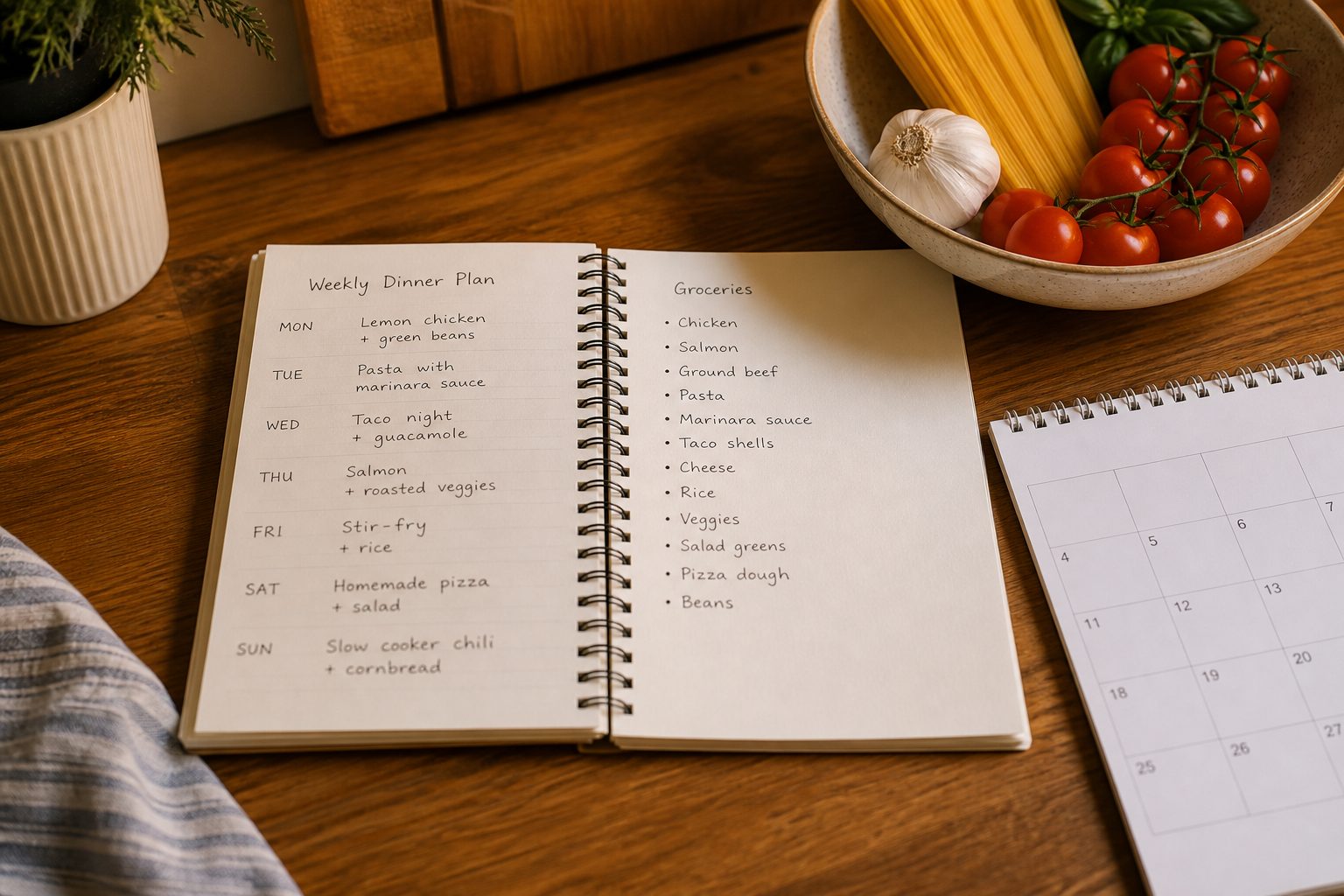
A single bulk roast on Sunday can organize the rhythm of dinners for the days that follow without requiring elaborate new shopping or daily reinvention. The sequence below shows how one tray of vegetables and a modest protein portion expand into seven meals through deliberate reuse, storage choices, and small course corrections drawn from household preferences.
Concrete Sample Week Starting From Sunday Roast
Sunday begins with a sheet pan holding two pounds of bone-in chicken thighs, two pounds of Yukon gold potatoes cut into wedges, a pound and a half of carrots in large chunks, and a pound of broccoli florets. Olive oil, salt, pepper, and dried thyme coat everything before the pan enters a 425-degree oven for forty-five minutes. The chicken reaches an internal temperature of 165 degrees while the vegetables soften at the edges and develop browned spots. After cooling, the thighs are portioned into four servings: two for immediate dinner with a simple pan sauce made from the drippings, and two stored in the refrigerator for later use.
Monday reuses the remaining roasted chicken and half the potatoes. The chicken is shredded and folded into warm tortillas with a quick salsa made from pantry tomatoes and onions, creating soft tacos. The potatoes are reheated in a skillet with a little oil until crisp on the cut sides. Carrots from the original roast are left untouched in the refrigerator so they stay firm for a later meal.
Tuesday turns the leftover carrots into a supporting element rather than the main attraction. They are diced and simmered briefly with canned chickpeas, cumin, and a splash of the original roasting liquid to form a loose stew served over the remaining broccoli, which has been quickly steamed to refresh its color. A small amount of yogurt thinned with lemon juice finishes the bowl. No new proteins are introduced.
Wednesday requires the first deliberate shift. The household has eaten chicken twice and roasted vegetables three times, so the remaining potatoes are mashed with milk and butter and served alongside pan-seared pork chops bought earlier in the week. A simple cabbage slaw made from a quarter head of green cabbage provides crunch and uses an item already in the crisper.
Thursday recycles the mashed potatoes into patties that are pan-fried until golden. These sit under a fried egg and a spoonful of the leftover chickpea mixture from Tuesday. The meal takes fifteen minutes because the components were already cooked and only needed reheating or assembly.
Friday uses the last of the roasted vegetables as a base for pasta. The carrots and broccoli are chopped fine and tossed with olive oil, garlic, and red-pepper flakes before being combined with penne and a generous grating of Parmesan. A single can of tuna provides additional protein without requiring another trip to the store.
Saturday closes the loop with a composed salad. Any remaining roasted elements are cut smaller and arranged over fresh greens with a mustard vinaigrette. The meal feels lighter after several days of cooked vegetables and satisfies the desire for something uncooked.
Why These Vegetables and Proteins Were Chosen
Yukon gold potatoes were selected because they hold their shape after roasting yet mash or crisp well on subsequent days, reducing the chance that leftovers become unappealing. Carrots survive extended refrigerator storage without turning soft or losing sweetness, and their natural sugars concentrate during the initial roast, giving later dishes built-in flavor. Broccoli was limited to one pound because its texture deteriorates faster than root vegetables once cooked; using it early in the week prevents waste.
Chicken thighs were chosen over breasts for their higher fat content, which keeps the meat moist through reheating and allows the rendered fat to flavor the accompanying vegetables on the same pan. Pork chops appear mid-week because they cook quickly and contrast in texture with the softer roasted items. Canned chickpeas and tuna were kept on hand as low-effort protein additions that do not require additional cooking time or freezer space.
The quantities reflect a household of three adults who eat dinner together most nights. Two pounds of chicken yields roughly six modest servings when combined with vegetables, and the two pounds of potatoes stretch across four meals when repurposed rather than served in full portions each time. This ratio avoids both shortage and excess that would force repetition beyond the point of enjoyment.
How Pantry Stock Influenced Portion and Storage Rules
The decision to roast exactly the amounts listed above was shaped by what was already on the shelves: a nearly full jar of dried thyme, a half-used bottle of olive oil, and two cans of chickpeas. These items dictated that the roasted vegetables could be extended with beans rather than requiring a second protein purchase. Storage containers were assigned specific roles before cooking began. One large glass container holds the intact roasted vegetables for quick retrieval, while a smaller one receives the shredded chicken so it can be located without rummaging. The mashed potatoes are pressed into a shallow dish so they reheat evenly in the microwave or skillet.
Portion sizes were adjusted downward on the initial roast because the pantry already contained dry pasta and rice that could fill out later meals. This prevented the roasted components from being overproduced and then discarded. Carrots were left in larger pieces during roasting specifically because smaller dice would have dried out during the week; the larger size also made them easier to recognize and repurpose without additional chopping.
Mid-Week Adjustments Made From Actual Household Feedback
By Wednesday evening the household noted that the roasted carrots had begun to taste repetitive when served in the same form. The decision was made to move them into the chickpea stew rather than reheating them plainly again. One adult requested more green color on Thursday, which prompted the addition of the cabbage slaw instead of another vegetable sauté. On Friday the mashed-potato patties were reduced in size after the cook observed that the previous night’s portions had left one person slightly overfull; the smaller cakes allowed room for the pasta on Friday without feeling heavy.
Saturday’s salad was assembled only after confirming that no one wanted another hot meal. The remaining roasted vegetables were used as accents rather than the base, which kept the dish from feeling like a rehash. These changes were noted mentally for the next week’s planning so the initial roast could include a slightly different mix of vegetables if the same pattern began to emerge.
If you would rather keep the calendar and shopping list together, myDinnerPlan is one option for putting this approach into practice.
Ready to put this into practice? Plan your week with myDinnerPlan.
Create free account